Dispossesions in the Americas

Dispossesions in the Americas

  • Home
  • Explore
  • About
  • Authors
  • Art
  • Bodies
  • Curricula
  • Cultural Heritage
  • Maps
  • Territories
Back to Explore
Narrative 1492 - 1850

Estimating Population Loss and the Ongoing Aftermaths of Colonization

  • Williams, Charlotte

Published: 2023

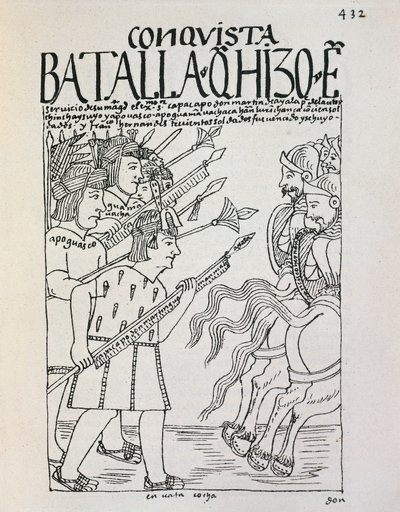
Figure 1 Felipe Guaman Poma de Ayala, "Conquest of Cuzco by Spanish Conquistadors 1533.”

Figure 1 Felipe Guaman Poma de Ayala, “Conquest of Cuzco by Spanish Conquistadors 1533.”

Abstract

In the story of colonization, enslavement, forced migration, and racism that were and are foundational to the construction of the Americas, there was in fact no single “event” nor one ‘arrival” that simultaneously altered continents. Nor did these arrivals, stumblings, and accidents of European presence alter the heterogenous, overlapping, and diverse groups of Indigenous people in the same manner. In other words, the serial arrivals and enfolding of Spaniards within the Americas was not the immediate end, nor the full “collapse” of societies– it was, however, a drastic change that affected people, their families, and their cultures in ongoing and layered aftermaths of colonization, racial capitalism, and cultural genocide. As soon as Spaniards arrived, there was always resistance, new braidings of knowledges, and language and cultural practices that persisted. The generations of Spanish arrival, did, however, characterize a profoundly new chapter for many citizens and inhabitants in the Americas.

There is no single event, nor one arrival, that simultaneously altered the Americas.1 The serial arrivals and enfolding of colonists from Europe and elsewhere within the Americas was not the immediate end, nor the full “collapse2” of societies– it was, however, a drastic change that affected people, their families, and their cultures in ongoing and layered aftermaths of colonization, racial capitalism3, and cultural genocide. As soon as colonists arrived, there was resistance, new braiding of knowledges4, and language and cultural practices that persisted and were fought for. The generations of Spanish arrival, did, however, characterize a profoundly new chapter for many citizens and inhabitants in the Americas.

Statistics do not always capture the granularity of loss. It is very unlikely that we will fully understand the extent to which war, capitalism, slavery, and disease changed the populations of the Americas, and scholars have debated for more than a century about the loss of lives between 1492 and 1900.5 Scholars have attempted to reconstruct the number through analyzing carrying capacities of land(or how many calories each parcel of farmed land could supply a population),6 or quantifying relative population densities and multiplying it by space7 or using a host of colonial census data8 to estimate how many people were living throughout the colonial world. While all imperfect, their estimates reveal that through genocide, disease, and violence, people lost their lives in complex and drastic ways, culminating in a hemispheric genocide of “unmatched proportions.”9 Even colonial Spanish authorities estimated that a century after Spanish presence, nearly a third of Indigenous populations had perished.10

Currently there is a consensus that the Indigenous population of the Americas was decimated by as much as 90% in the aftermath of colonization, a number that reduced nearly 100 million people to just 10 million.11 Disease played an enormous role in this decimation, but it should not be thought of as a separate entity. Rather, disease should be thought of as a more elusive form of biological warfare, a weapon in the arsenal of colonization. As Roxanne Dunbar Ortiz argues, disease alone did not do the job- it was only through the landscape of warfare, forced labor, and revolt that the conditions for disease were optimized for its takeover.12 The aftermath should also not be negated. Massimo Livi Bacci argues that in addition to abuse, the systematic disruption of Amerindian life through dissolving familiar, economic, and social ties led to immense population decline.13

Central to the conditions of loss was the institution of slavery and indenture, and their enmeshment in capitalist extractivism. From 1501 to 1650, an estimated 726,000 African people were kidnapped and enslaved in the Americas by Portuguese, and later Dutch elites.14 This number is eclipsed by the next era of enslavement, in which English and French elites controlling sugar and tobacco plantations kidnapped and enslaved about 4.8 million people from the African continent; in the following century, until, but not completely stopping, in 1866, another 5.1 million people were sold into slavery and brought into the Americas15.

The city of Potosí, in modern day Bolivia, became the world’s largest silver mine in the mid 17th century, and also one of the largest cities in the world- in over three centuries of mining, an estimated 8 million Indigenous people from the region now forming Peru, Bolivia, and East Africa were killed through unsafe mining conditions and labor.16

To speak of a post-colonial moment erases the ongoing internal colonialisms17 that came to encompass economic and social systems. The story of the Americas, and that of the current worlds that we inhabit, are embedded in logics of coloniality. At the same time, we must also be aware that coloniality was often negotiated and was and is an ongoing relationship. We cannot simply think of colonial orders as perfect exports from one system onto another, but rather as systems that emerged in response to, in appropriation of, and sometimes in tandem and alliances with Indigenous systems.18 Our current world order, nationhood, and self-determination, are also products of revolt, resistance, and fights for justice.

Bibliography

Dean,C. & Leibsohn, D “Hybridity and Its Discontents: Considering Visual Culture in Colonial Spanish America” Colonial Latin American Review, 12:1(2003): 5-35.

Denevan, W. M. Estimating Amazonian Indian Numbers in 1492. Journal of Latin American Geography, 13(2),(2014): 207–221

Dunbar-Ortiz, Roxanne. An Indigenous peoples’ history of the United States. Vol. 3. Beacon Press, 2014.

Englert, Sai. “Accumulate, Accumulate!” In Settler Colonialism: An Introduction, 26–78. Pluto Press, 2022.

Koch, Alexander, Chris Brierley, Mark M. Maslin, Simon L. Lewis, “Earth system impacts of the European arrival and Great Dying in the Americas after 1492”, Quaternary Science Reviews, Volume 207, (2019):13-36.

Liebmann, Matthew J., Joshua Farella, Christopher I. Roos, Adam Stack, Sarah Martini, and Thomas W. Swetnam. “Native American Depopulation, Reforestation, and Fire Regimes in the Southwest United States, 1492–1900 CE.” Proceedings of the National Academy of Sciences of the United States of America 113, no. 6 (2016): E696–704.

Livi Bacci, Massimo Conquest: the Destruction of the American Indios. Translated from italian by Carl Ipsen. Cambridge, UK and Maiden, MA: Polity 2008.

Malpass, Michael A., and Sonia Alconini. “Provincial Inka studies in the twenty-first century.” Distant provinces in the Inka Empire. Toward a deeper understanding of Inka imperialism (2010): 1-13.

Moreton-Robinson, Aileen: The White Possessive:Property, Power,and Indigenous Sovereignty. Minneapolis University of Minnesota Press (2015)

Projit Mukharji Doctoring Traditions: Ayurveda, Small Technologies, and Braided Knowledges. Chicago: University of Chicago Press. 2016.

David Reher “Reflections on the Fate of Indigenous Populations of America” Population and Development Review 37 no. 1 (2011): 172-77.

Robinson, Cedric. Black Marxism: the Making of a Black Radical Tradition. Chapel Hill: University of North Carolina Press.1983.

Tallbear, Kimberly and Jenny Reardon, esp. “Your DNA is our History”: Genomics, Anthropology, and the Construction of Whiteness as Property. Current Anthropology. V 53 no 5 April 2012: S233-S245.

Quijano, Anibal. “Coloniality of power and Eurocentrism in Latin America." International sociology 15, no. 2 (2000): 215-232.


  1. As scholar David Truer notes, “The colonization of North America is often seen as a binary struggle, a series of conflicts between Indians and settlers. But in the fact of disease, starvation, and displacement, conflict occurred along multiple vectors. Tribes allied with other tribes against yet other tribes; colonial powers made alliances with certain tribes against other tribes and against other colonial powers.” See David Truer (2019). Some Indigenous groups gained more authority under Spanish control when Indigenous kingdoms like the Inka empire fell. See Malpass, Michael A., and Sonia Alconini. “Provincial Inka studies in the twenty-first century." Distant provinces in the Inka Empire. Toward a deeper understanding of Inka imperialism (2010): 1-13. Other demographics fared far worse: when viewed with the critical lens of gender, Indigenous women suffered in distinct ways, and in colonial logics were made, legally, the property of men. See Englert 2022: 45. ↩︎

  2. Many scholars work against the term “collapse” because it conjures ideas of total erasure. Many times the idea of total erasure of populations has been used against Indigenous survivors of colonial violence. More specifically, many colonial authorities used the term to take people’s land and cultural heritage sites and artifacts under the assumption that no one was left to care for them. This is untrue, and many continue the fight to reclaim stolen land and heritage objects, and in many cases, their own bodily autonomy. For how this effected land and territory, see Ailieen Moreton-Robinson’s the White Possessive:Property, Power,and Indigenous Sovereignty. Minneapolis University of Minnesota Press (2015). For how uncritical notions of “hybridity” have disenfranchised Indigenous people, see work by Kimberly Tallbear and Jenny Reardon, esp. “Your DNA is our History”: Genomics, Anthropology, and the Construction of Whiteness as Property. Current Anthropology. V 53 no 5 April 2012: S233-S245. ↩︎

  3. The term “racial capitalism” is a famous term coined by theorist Cedric Robinson. The term refers to how current systems of capitalism cannot be divorced from histories of slavery, and how unequal economic conditions became increasingly forged around social perceptions of race. See Cedric Robinson Black Marxism: the Making of a Black Radical Tradition. Chapel Hill: University of North Carolina Press.1983. ↩︎

  4. The term “braided knowledge” comes from Projit Mukharji, and refers to the way in which understandings, practices, and knowledges often influence each other such that they entwine into something new. Projit Mukharji Doctoring Traditions: Ayurveda, Small Technologies, and Braided Knowledges. Chicago: University of Chicago Press. 2016. See also scholars that write critically on the notion of “hybridity” in which two parts are seen as distinct that are brought together. Many point to the fact that classifying practices and ideas as either just Indigenous or Spanish actually disserves us, as we then do not take art, religion, and worldviews as wholistic, but rather syncretic. See Carolyn Dean and Leibsohn “Hybridity and its Discontents: Considering Visual Culture in Colonial Spanish America” Latin American Review volume 12 no 1 (2016):5-35. ↩︎

  5. Matthew Liebmann et al “Native American Depopulation, Reforestation, and Fire Regimes in the Southwest United States, 1492–1900 CE.” Proceedings of the National Academy of Sciences of the United States of America 113, no. 6 (2016): E696–704. ↩︎

  6. Some studies suggest that after areas were abandoned post 1492 and lands grew fallow, that there was actual measurable amounts of carbon uptake, in that the growing of trees and plants actually impacted the amount of CO2 in the atmosphere In this case it is through the record that the earth keeps, in its Antarctic ice cores and pollen records that we can understand how the carrying capacity of lands must have been so enormous that what has been termed as “great dying” of people left atmospheric traces. See Alexander Koch et al, “Earth system impacts of the European arrival and Great Dying in the Americas after 1492”, Quaternary Science Reviews, Volume 207, (2019):13-36. ↩︎

  7. Denevan. William M. Estimating the Native Population of the Americas in 1492. Madison: University of Wisconsin Press. 1992. ↩︎

  8. William Denevan, the Native Population of the Americas in 1492. Madison: University of Wisconsin Press. 1992:14. ↩︎

  9. Englert, Sai. “Accumulate, Accumulate!” In Settler Colonialism: An Introduction, 26–78. Pluto Press, 2022. ↩︎

  10. Englert Settler Colonialism: p35. ↩︎

  11. It was a disaster of such magnitude that the often-cited example of the 17th century Black Death in Eurasia completely “pales in comparison” David Reher “Reflections on the Fate of Indigenous Populations of America” Population and Development Review 37 no. 1 (2011): 172-77. ↩︎

  12. Roxanne Dunbar-Ortiz, An Indigenous peoples’ history of the United States. Vol. 3. Beacon Press, 2014. ↩︎

  13. Massimo Livi Bacci Conquest: the Destruction of the American Indios. Translated from italian by Carl Ipsen. Cambridge, UK and Maiden, MA: Polity 2008. ↩︎

  14. Englert Settler Colonialism: pp 58-59. ↩︎

  15. Englert Settler Colonialism: pp 58-59. ↩︎

  16. Englert Settler Colonialism: p 46. ↩︎

  17. Anibal Quijano “Coloniality of power and Eurocentrism in Latin America." International sociology 15, no. 2 (2000): 215-232. ↩︎

  18. Moreton Robinson The White Possessive. ↩︎

Citation

Williams, Charlotte. 2023. 'Estimating Population Loss and the Ongoing Aftermaths of Colonization'. Dispossessions in the Americas. https://dia.upenn.edu/en/content/WilliamsC004/
Reading in Spanish

Narrative 1492 - 1850

Estimación de la pérdida de población y secuelas de la colonización

  • Williams, Charlotte

Published: 2023

Figura 1 Felipe Guaman Poma de Ayala, "Conquista de Cuzco en manos de los conquistadores españoles, 1533"

Figura 1 Felipe Guaman Poma de Ayala, “Conquista de Cuzco en manos de los conquistadores españoles, 1533”

Reading in Portuguese

Narrative 1492 - 1850

Estimativa da Perda Populacional e as Consequências Contínuas da Colonização

  • Williams, Charlotte

Published: 2023

*Figura 1 Felipe Guaman Poma de Ayala, "Conquista de Cuzco en manos de los conquistadores españoles”, 1533*

Figura 1 Felipe Guaman Poma de Ayala, “Conquista de Cuzco en manos de los conquistadores españoles”, 1533

Resumo

Na história da colonização, da escravização, da migração forçada e do racismo, que foram e são fundamentais para a construção das Américas, na verdade não houve um único “evento” nem uma única “chegada” que tenha alterado os continentes simultaneamente. Também não é possível dizer que essas chegadas, tropeços e acidentes da presença europeia alteraram os grupos heterogêneos, sobrepostos e diversos dos indígenas da mesma maneira. Em outras palavras, as diversas chegadas e enraizamentos dos espanhóis nas Américas não representaram o fim imediato, nem o “colapso” total das sociedades – foram, contudo, uma mudança drástica que afetou as pessoas, suas famílias e suas culturas em consequências contínuas e multifacetadas da colonização, do capitalismo racial e do genocídio cultural. Desde a chegada dos espanhóis, sempre houve resistência, novos conhecimentos entrelaçados e práticas linguísticas e culturais que persistiram. As gerações de chegada espanhola, no entanto, representaram um capítulo profundamente novo para muitos cidadãos e habitantes das Américas.

Não há um único evento, nem uma única chegada, que tenha alterado simultaneamente as Américas.1 A chegada e o assentamento sucessivos de colonizadores da Europa e de outros lugares nas Américas não representaram o fim imediato, nem o “colapso”2 completo de sociedades – foi, no entanto, uma mudança drástica que afetou as pessoas, suas famílias e suas culturas em meio às consequências contínuas e multifacetadas da colonização, do capitalismo racial3 e do genocídio cultural. Desde a chegada dos espanhóis, sempre houve resistência, novos conhecimentos entrelaçados4 e práticas linguísticas e culturais que persistiram e foram defendidas. As gerações de chegada espanhola, no entanto, representaram um capítulo profundamente novo para muitos cidadãos e habitantes das Américas.

As estatísticas nem sempre captam a granularidade das perdas. É muito improvável que venhamos a compreender completamente a extensão em que a guerra, o capitalismo, a escravidão e as doenças alteraram as populações das Américas, e os acadÊmicos debatem há mais de um século sobre a perda de vidas entre 1492 e 1900.5 Pesquisadores têm tentado reconstruir esse número analisando a capacidade de suporte da terra (ou quantas calorias cada parcela de terra cultivada poderia fornecer a uma população),6 quantificando as densidades populacionais relativas e multiplicando-as pelo espaço,7 ou usando uma série de dados censitários coloniais8 para estimar quantas pessoas viviam em todo o mundo colonial. Embora imperfeitas, suas estimativas revelam que, por meio de genocídio, doenças e violência, pessoas perderam suas vidas de maneiras complexas e drásticas, culminando em um genocídio hemisférico de “proporções sem precedentes”.9 Até mesmo as autoridades coloniais espanholas estimaram que, um século após a chegada espanhola, quase um terço das populações indígenas havia perecido.10

Atualmente, existe um consenso de que a população indígena das Américas foi dizimada em até 90% após a colonização, um número que reduziu quase 100 milhões de pessoas para apenas 10 milhões.11 As doenças desempenharam um papel enorme nessa dizimação, mas não devem ser consideradas uma entidade separada. Em vez disso, as doenças devem ser vistas como uma forma mais sutil de guerra biológica, uma arma no arsenal da colonização. Como argumenta Roxanne Dunbar Ortiz, as doenças sozinhas não fizeram o trabalho – foi apenas através do cenário de guerra, trabalho forçado e revolta que as condições para as doenças se tornaram ideais para sua disseminação.12 As consequências também não devem ser ignoradas. Massimo Livi Bacci argumenta que, além dos abusos, a ruptura sistemática da vida dos ameríndios por meio da dissolução de laços familiares, econômicos e sociais levou a um imenso declínio populacional.13

A instituição da escravidão e do trabalho servil, e seu entrelaçamento no extrativismo capitalista, foi fundamental para as condições de perda. De 1501 a 1650, estima-se que 726 mil africanos foram sequestrados e escravizados nas Américas pelas elites portuguesas e, posteriormente, holandesas.14 Esse número é eclipsado pela era seguinte de escravização, na qual as elites inglesas e francesas, que controlavam as plantações de açúcar e tabaco, sequestraram e escravizaram cerca de 4,8 milhões de pessoas do continente africano. No século seguinte, até 1866, embora não tenha parado completamente, outras 5,1 milhões de pessoas foram vendidas como escravas e trazidas para as Américas.15

A cidade de Potosí, na atual Bolívia, tornou-se a maior mina de prata do mundo em meados do século XVII e também uma das maiores cidades do mundo. Ao longo de mais de três séculos de mineração, estima-se que 8 milhões de pessoas da África Oriental e da região que hoje compreende o Peru e a Bolívia foram mortas devido às inseguras condições de trabalho e atividades mineradoras.16

Falar de um momento pós-colonial apaga os colonialismos internos em curso17 que passaram a abranger os sistemas econômicos e sociais. A história das Américas, e a dos mundos atuais que habitamos, está integrada às lógicas da colonialidade. Ao mesmo tempo, devemos também estar cientes de que a colonialidade foi frequentemente negociada. Era e continua sendo uma relação em curso. Não podemos simplesmente pensar nas ordens coloniais como exportações perfeitas de um sistema para outro, mas sim como sistemas que emergiram em resposta a, em apropriação de, e, por vezes, em conjunto e em aliança com, os sistemas indígenas.18 A nossa atual ordem mundial, as nações e a autodeterminação são também produtos de revoltas, resistência e da luta por justiça.

Bibliografia

Dean,C. e Leibsohn, D. “Hybridity and Its Discontents: Considering Visual Culture in Colonial Spanish America” Colonial Latin American Review, 12:1(2003): 5-35.

Denevan, W. M. Estimating Amazonian Indian Numbers in 1492. Journal of Latin American Geography, 13(2),(2014): 207–221

Dunbar-Ortiz, Roxanne. An Indigenous peoples’ history of the United States. Vol. 3. Beacon Press, 2014.

Englert, Sai. “Accumulate, Accumulate!” In Settler Colonialism: An Introduction, 26–78. Pluto Press, 2022.

Koch, Alexander, Chris Brierley, Mark M. Maslin e Simon L. Lewis, “Earth system impacts of the European arrival and Great Dying in the Americas after 1492”, Quaternary Science Reviews, Volume 207, (2019):13-36.

Liebmann, Matthew J., Joshua Farella, Christopher I. Roos, Adam Stack, Sarah Martini e Thomas W. Swetnam. “Native American Depopulation, Reforestation, and Fire Regimes in the Southwest United States, 1492–1900 CE”, Proceedings of the National Academy of Sciences of the United States of America 113, no. 6 (2016): E696–704.

Livi Bacci, Massimo. Conquest: the Destruction of the American Indios. Traduzido do italiano por Carl Ipsen. Cambridge, UK e Maiden, MA: Polity 2008.

Malpass, Michael A., e Sonia Alconini. “Provincial Inka studies in the twenty-first century”. Distant provinces in the Inka Empire. Toward a deeper understanding of Inka imperialism (2010): 1-13.

Moreton-Robinson, Aileen: The White Possessive:Property, Power,and Indigenous Sovereignty. Minneapolis University of Minnesota Press (2015)

Projit Mukharji. Doctoring Traditions: Ayurveda, Small Technologies, and Braided Knowledges. Chicago: University of Chicago Press. 2016.

David Reher. “Reflections on the Fate of Indigenous Populations of America” Population and Development Review 37 no. 1 (2011): 172-77.

Robinson, Cedric. Black Marxism: the Making of a Black Radical Tradition. Chapel Hill: University of North Carolina Press.1983.

Tallbear, Kimberly e Jenny Reardon, esp. “Your DNA is our History”: Genomics, Anthropology, and the Construction of Whiteness as Property. Current Anthropology. V 53 no. 5, abril de 2012: S233-S245.

Quijano, Anibal. “Coloniality of power and Eurocentrism in Latin America." International sociology 15, no. 2 (2000): 215-232.


  1. Como observa o acadêmico David Truer, “A colonização da América do Norte é frequentemente vista como uma luta binária, uma série de conflitos entre indígenas e colonizadores. Mas, diante de doenças, fome e deslocamentos, o conflito se desenrolou em múltiplas frentes. Tribos se aliavam a outras tribos contra outras tribos ainda; potências coloniais faziam alianças com certas tribos contra outras tribos e contra outras potências coloniais”. Ver David Truer (2019). Alguns grupos indígenas ganharam mais autoridade sob o controle espanhol quando reinos indígenas como o Império Inca caíram. Ver Malpass, Michael A., e Sonia Alconini. “Provincial Inka studies in the twenty-first century”. Distant provinces in the Inka Empire. Toward a deeper understanding of Inka imperialism (2010): 1-13. Outros grupos demográficos sofreram muito mais: quando analisamos ​​sob a perspectiva crítica de gênero, vemos que as mulheres indígenas sofreram de maneiras distintas e, na lógica colonial, foram legalmente consideradas propriedade dos homens. Ver Englert 2022: 45. ↩︎

  2. Muitos acadêmicos se opõem ao termo “colapso” porque ele evoca ideias de apagamento total. Muitas vezes, a ideia de apagamento total de populações foi usada contra indígenas sobreviventes da violência colonial. Mais especificamente, muitas autoridades coloniais usavam o termo para tomar as terras, os locais e os artefatos do patrimônio cultural das pessoas, sob o pressuposto de que não havia sobrado ninguém para cuidar deles. Isso não é verdade e muitos continuam a luta para recuperar terras e bens patrimoniais roubados e, em muitos casos, sua própria autonomia corporal. Sobre como isso afetou terra e território, ver Ailieen Moreton-Robinson’s the White Possessive:Property, Power,and Indigenous Sovereignty. Minneapolis University of Minnesota Press (2015). Sobre como noções acríticas de “hibridismo” marginalizaram os povos indígenas, ver o trabalho de Kimberly Tallbear e Jenny Reardon, esp. “Your DNA is our History”: Genomics, Anthropology, and the Construction of Whiteness as Property. Current Anthropology. V 53 no. 5, abril de 2012: S233-S245. ↩︎

  3. O termo “capitalismo racial” é um termo famoso cunhado pelo teórico Cedric Robinson. O termo se refere a como os sistemas atuais de capitalismo não podem ser dissociados das histórias da escravidão e como as condições econômicas desiguais foram cada vez mais forjadas em torno das percepções sociais de raça. Ver Cedric Robinson Black Marxism: the Making of a Black Radical Tradition. Chapel Hill: University of North Carolina Press.1983. ↩︎

  4. O termo “conhecimento entrelaçado” vem de Projit Mukharji e se refere à maneira como entendimentos, práticas e saberes frequentemente se influenciam mutuamente, de modo que se entrelaçam em algo novo. Projit Mukharji Doctoring Traditions: Ayurveda, Small Technologies, and Braided Knowledges. Chicago: University of Chicago Press. 2016. Ver também os acadêmicos que escrevem criticamente sobre a noção de “hibridismo”, na qual duas partes vistas como distintas são reunidas. Muitos apontam para o fato de que classificar práticas e ideias como apenas indígenas ou espanholas, na verdade, nos prejudica, pois assim não consideramos a arte, a religião e as visões de mundo como holísticas, mas sim como um sincretismo. Ver Carolyn Dean e Leibsohn “Hybridity and its Discontents: Considering Visual Culture in Colonial Spanish America” Latin American Review volume 12 no. 1 (2016):5-35. ↩︎

  5. Matthew Liebmann et al, “Native American Depopulation, Reforestation, and Fire Regimes in the Southwest United States, 1492–1900 CE”. Proceedings of the National Academy of Sciences of the United States of America 113, no. 6 (2016): E696–704. ↩︎

  6. Alguns estudos sugerem que, após o abandono de certas áreas depois de 1492 e a consequente improdutividade da terra, houve uma absorção real e mensurável de carbono, onde o crescimento de árvores e plantas de fato impactou a quantidade de CO2 na atmosfera. Neste caso, através do registro que a Terra guarda, em seus núcleos de gelo na Antártida e registros de pólen, podemos entender como a capacidade de suporte das terras deve ter sido tão enorme que o que foi denominado de “grande extinção” da população deixou vestígios atmosféricos. Ver Alexander Koch et al, “Earth system impacts of the European arrival and Great Dying in the Americas after 1492”, Quaternary Science Reviews, Volume 207, (2019):13-36. ↩︎

  7. Denevan. William M. Estimating the Native Population of the Americas in 1492. Madison: University of Wisconsin Press. 1992. ↩︎

  8. William Denevan, the Native Population of the Americas in 1492. Madison: University of Wisconsin Press. 1992:14. ↩︎

  9. Englert, Sai. “Accumulate, Accumulate!” In Settler Colonialism: An Introduction, 26–78. Pluto Press, 2022. ↩︎

  10. Englert Settler Colonialism: p. 35. ↩︎

  11. Foi um desastre de tal magnitude que o exemplo frequentemente citado da Peste Negra na Eurásia, no século XVII, “empalidece completamente em comparação”. David Reher “Reflections on the Fate of Indigenous Populations of America” Population and Development Review 37 no. 1 (2011): 172-77. ↩︎

  12. Roxanne Dunbar-Ortiz, An Indigenous peoples’ history of the United States. Vol. 3. Beacon Press, 2014. ↩︎

  13. Massimo Livi Bacci Conquest: the Destruction of the American Indios. Traduzido do italiano por Carl Ipsen. Cambridge, UK e Maiden, MA: Polity 2008. ↩︎

  14. Englert, Settler Colonialism: p. 58-59. ↩︎

  15. Englert, Settler Colonialism: p. 58-59. ↩︎

  16. Englert, Settler Colonialism: p. 46. ↩︎

  17. Anibal Quijano, “Coloniality of power and Eurocentrism in Latin America”, International sociology 15, no. 2 (2000): 215-232. ↩︎

  18. Moreton Robinson, The White Possessive. ↩︎

Citation

Williams, Charlotte. 2023. 'Estimativa da Perda Populacional e as Consequências Contínuas da Colonização'. Dispossessions in the Americas. https://dia.upenn.edu/pt/content/WilliamsC004/

Related Content

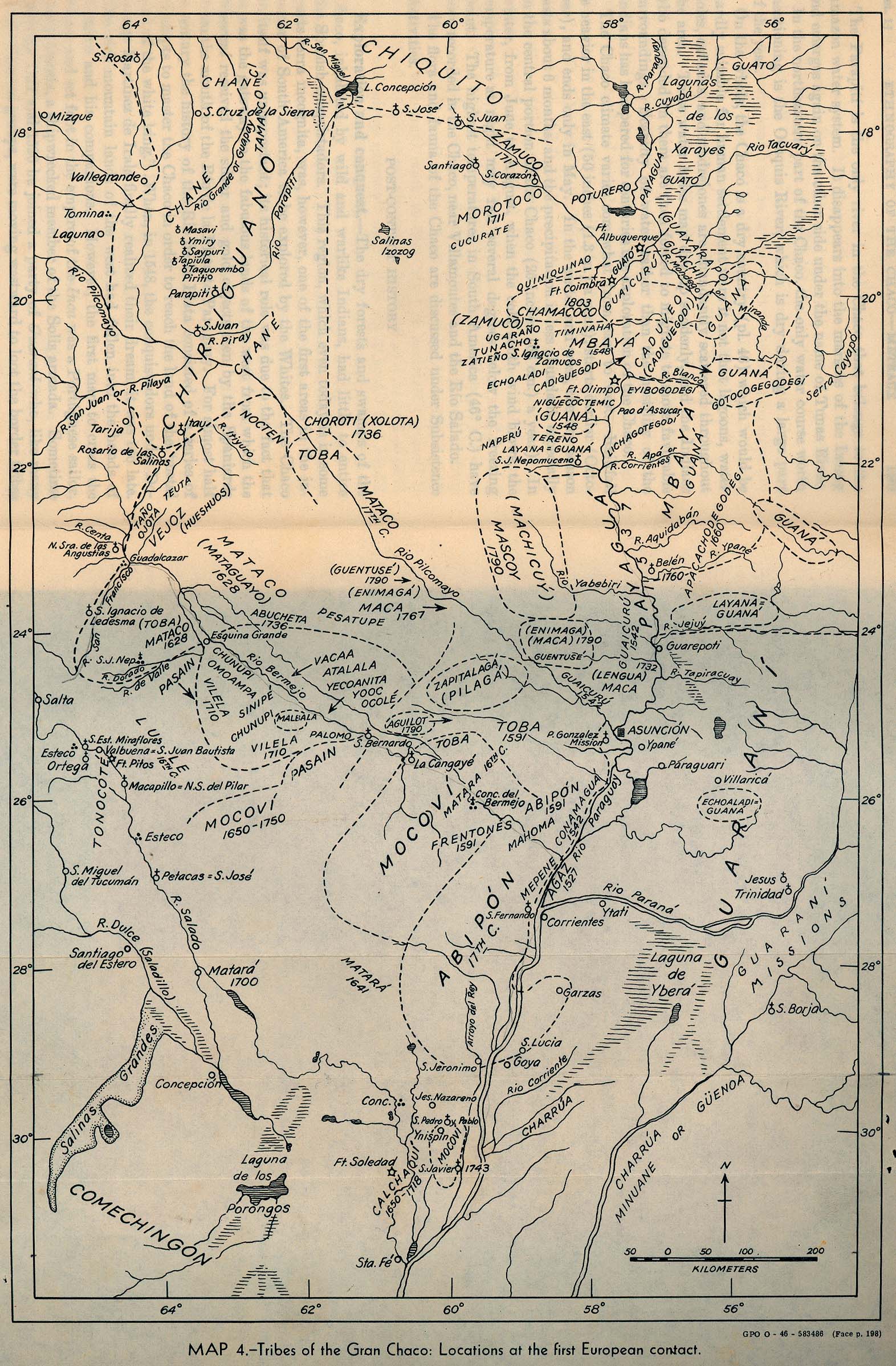
Tribes of the Gran Chaco: Locations at the first European contact

Tribes of the Gran Chaco: Locations at the first European contact

Map 1524
Money doesn’t grow on trees but avocados do (Oro verde)

Money doesn’t grow on trees but avocados do (Oro verde)

Artwork
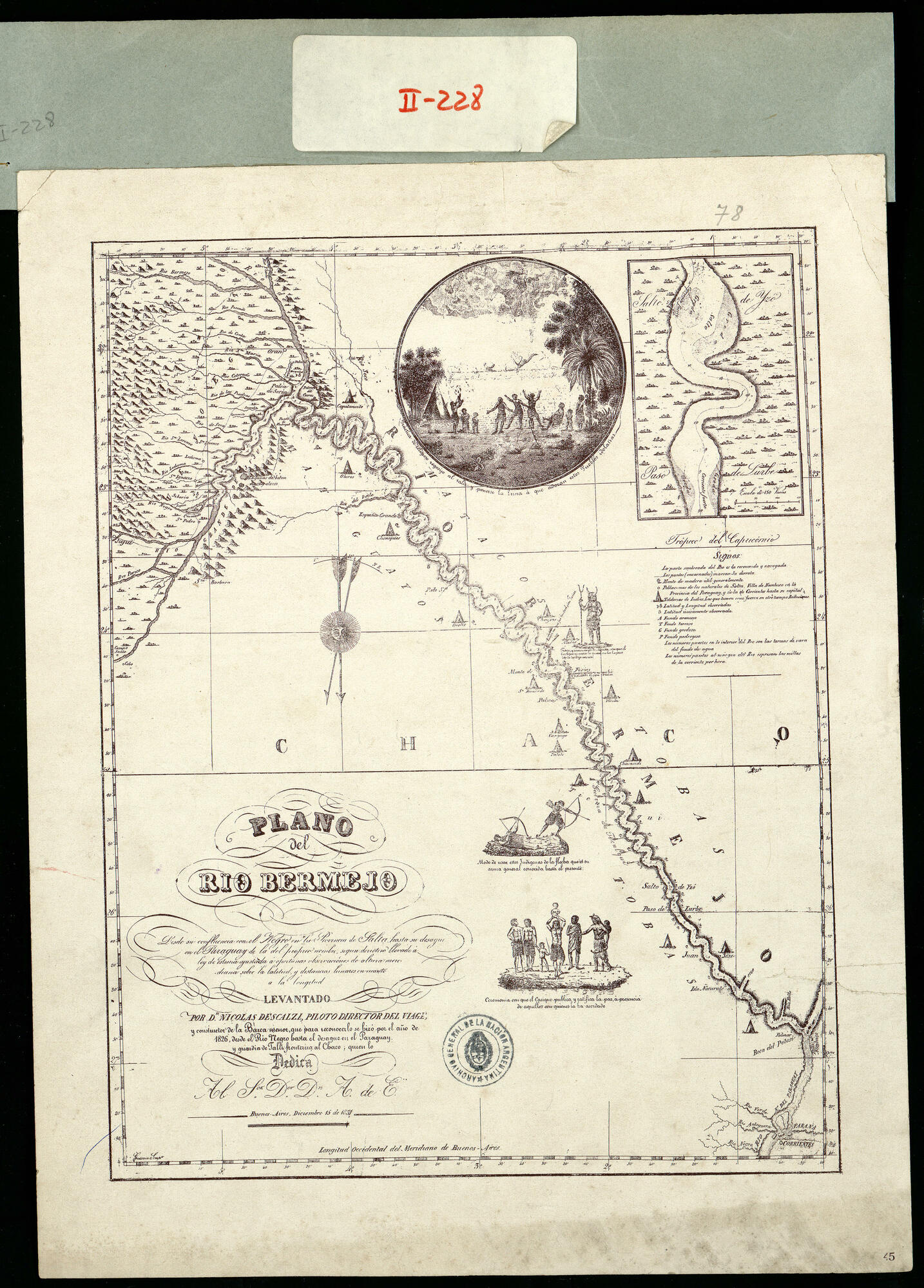
Plano del Río Bermejo desde su confluencia con el Negro en la Provincia de Salta hasta su desagüe en el Paraguay de la del propio nombre según derrotero llevado a ley de estima ajustada a oportunas observaciones de altura meridiana sobre la latitud y distancias lunares en cuanto a la longitud. Levantado por Don Nicolás Descalzi piloto director del viaje y constructor de la barca menor que para reconocerlo se hizo por el año de 1826 desde el Río Negro hasta el desagüe en el Paraguay y guardia de talla fronteriza al Chaco quien lo dedica al Señor Doctor Don A. de E. Impreso.

Plano del Río Bermejo desde su confluencia con el Negro en la Provincia de Salta hasta su desagüe en el Paraguay de la del propio nombre según derrotero llevado a ley de estima ajustada a oportunas observaciones de altura meridiana sobre la latitud y distancias lunares en cuanto a la longitud. Levantado por Don Nicolás Descalzi piloto director del viaje y constructor de la barca menor que para reconocerlo se hizo por el año de 1826 desde el Río Negro hasta el desagüe en el Paraguay y guardia de talla fronteriza al Chaco quien lo dedica al Señor Doctor Don A. de E. Impreso.

Map 1826
PUEBLO VACACOCHA

PUEBLO VACACOCHA

Map 2021
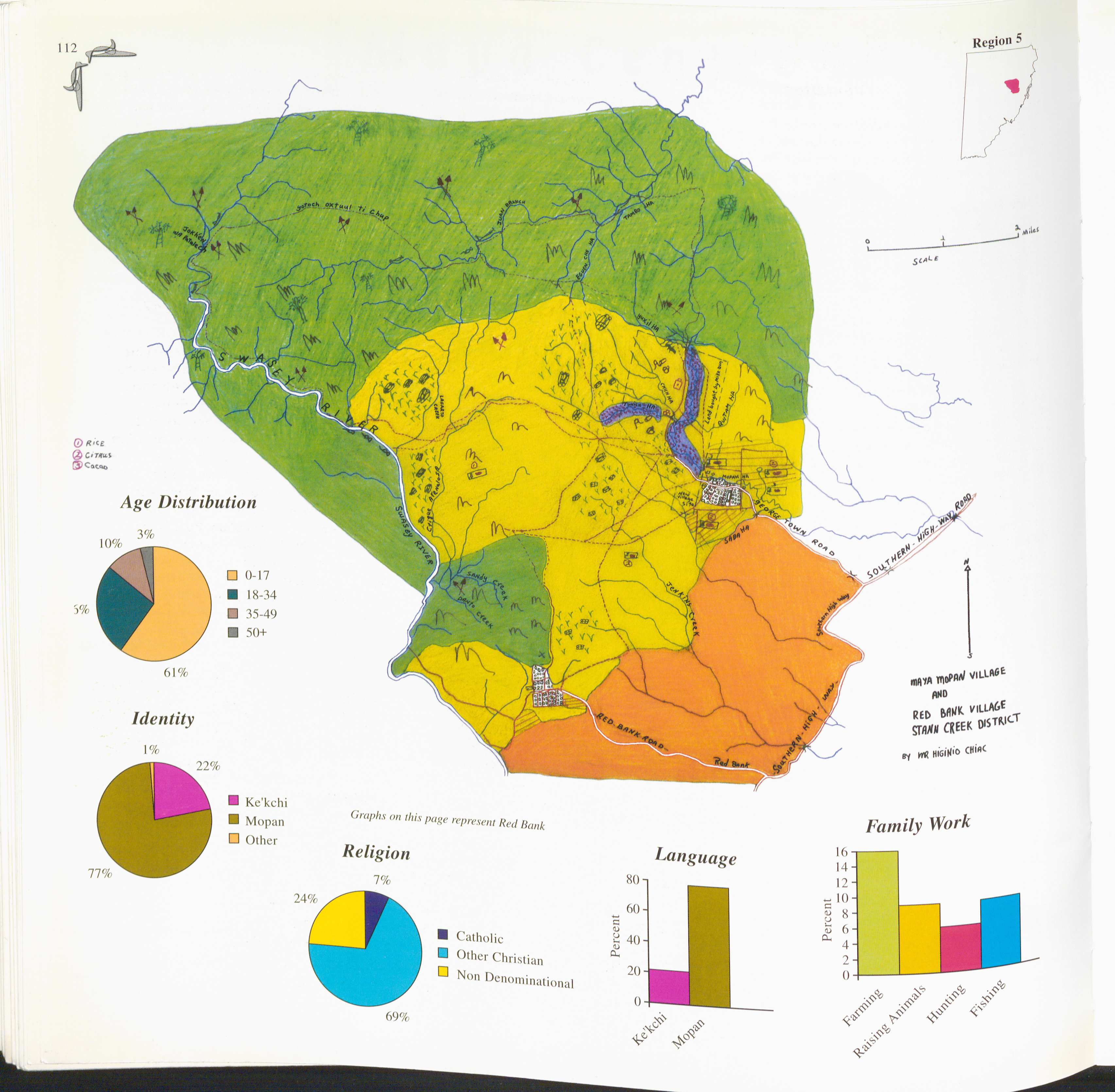
Red Bank and Maya Mopan

Red Bank and Maya Mopan

Map 1997
PUEBLO MUNICHE

PUEBLO MUNICHE

Map 2021
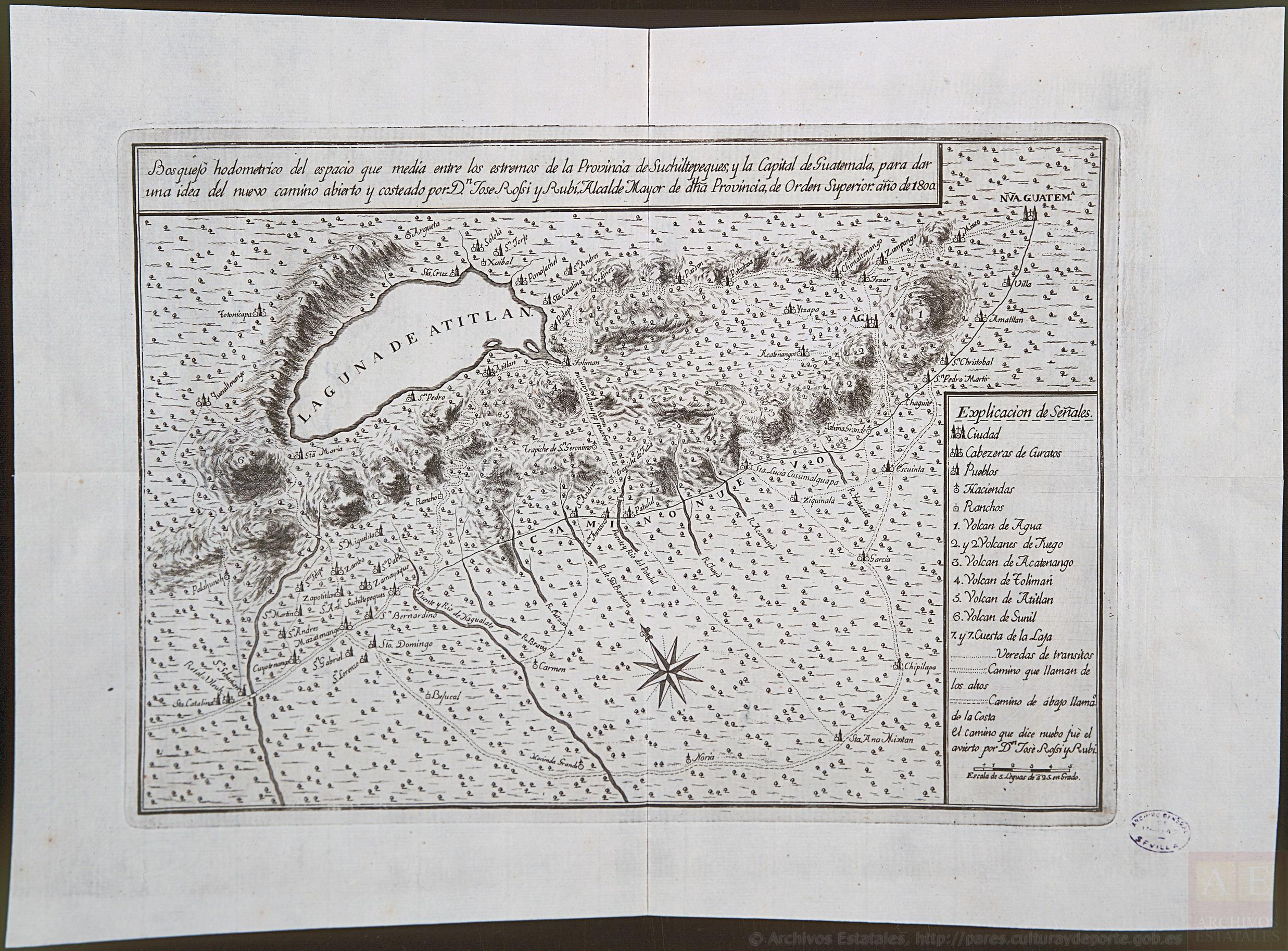
Bosquejo hodométrico del expacio que media entre los extremos de la Provincia de Suchiltepeques y la Capital de Guatemala, para dar una idea del nuevo camino abierto y costeado por D. José Rossi y Rubí, Alcalde mayor de dicha Provincia, de orden superior, año de 1800.

Bosquejo hodométrico del expacio que media entre los extremos de la Provincia de Suchiltepeques y la Capital de Guatemala, para dar una idea del nuevo camino abierto y costeado por D. José Rossi y Rubí, Alcalde mayor de dicha Provincia, de orden superior, año de 1800.

Map 1800
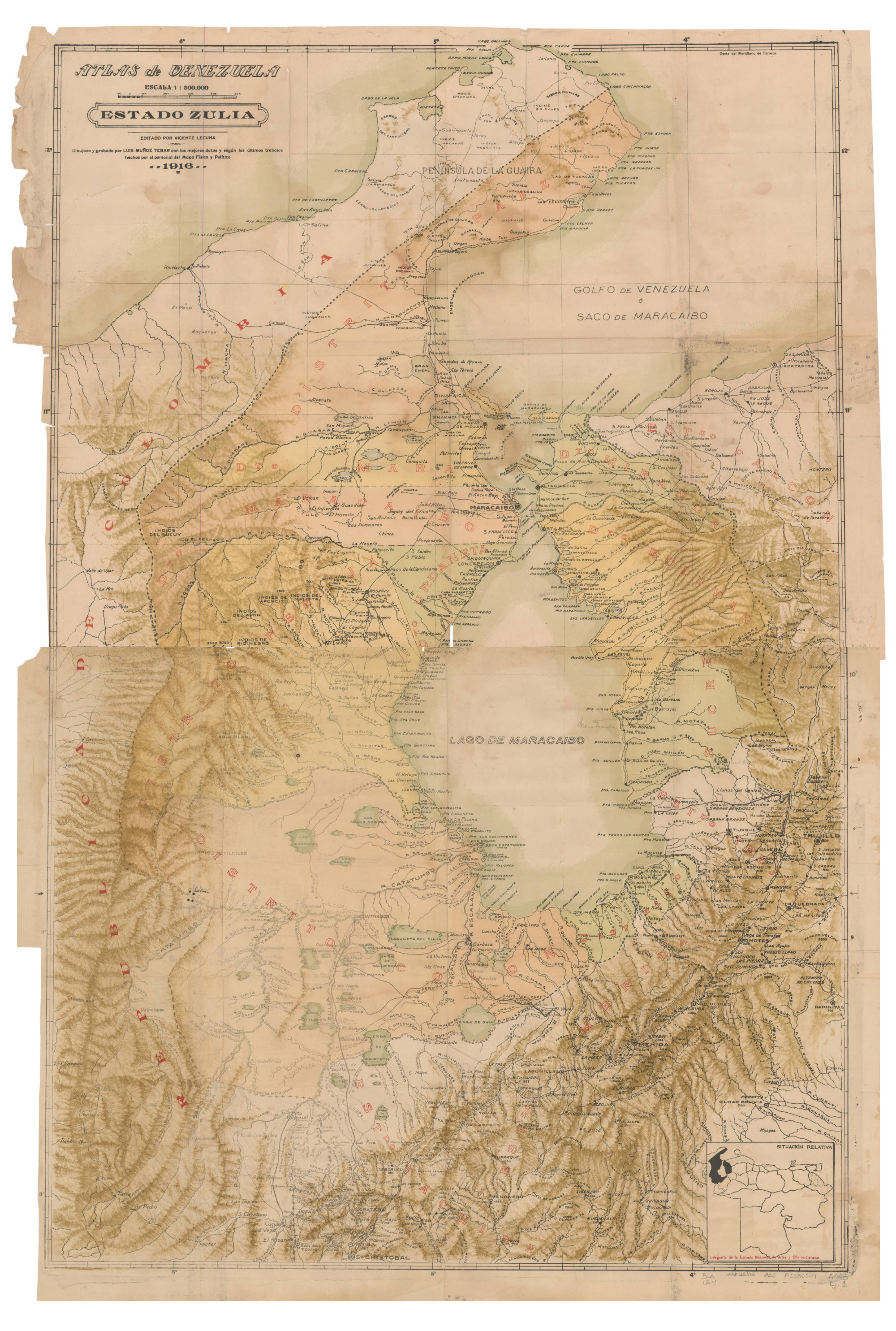
ATLAS de VENEZUELA ESTADO ZULIA

ATLAS de VENEZUELA ESTADO ZULIA

Map 1916

Dispossessions in the Americas

A project by

University of Pennsylvania

Copyright 2024

With support from

Mellon Foundation

Site design & development

Element 84

Art Credits

Figure 1 Felipe Guaman Poma de Ayala, “Conquest of Cuzco by Spanish Conquistadors 1533.”

Site Pages

  • Home
  • Explore
  • About
  • Authors
  • Art
  • Bodies
  • Curricula
  • Cultural Heritage
  • Maps
  • Territories