Dispossesions in the Americas

Dispossesions in the Americas

  • Home
  • Explore
  • About
  • Authors
  • Art
  • Bodies
  • Curricula
  • Cultural Heritage
  • Maps
  • Territories
Back to Explore
Map Commentary 1500 - 1599

THE AYMARA POLITY OF THE LUPAQA: EASTERN INTER-ANDEAN VALLEY COLONIES UNDER INCA RULE 16TH CENTURY

  • Medeiros, Carmen

  • Grisi, Celina

  • Sánchez Patzy, Radek

Published: 2024

  • Download Image
Saignes, T. (1985). Los Andes orientales: Historia de un olvido. CERES - Instituto Francés de Estudios Andinos.

Saignes, T. (1985). Los Andes orientales: Historia de un olvido. CERES - Instituto Francés de Estudios Andinos.

Abstract

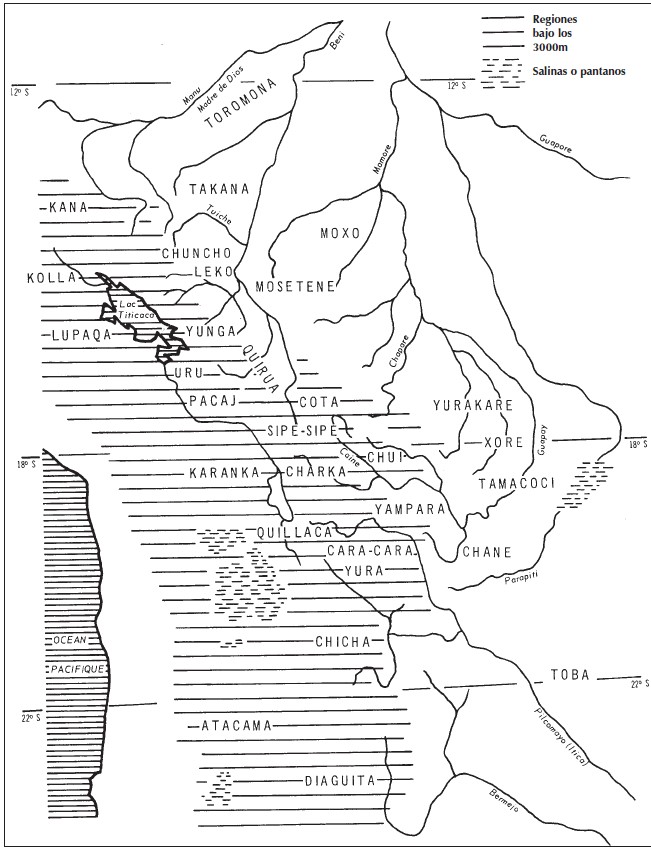
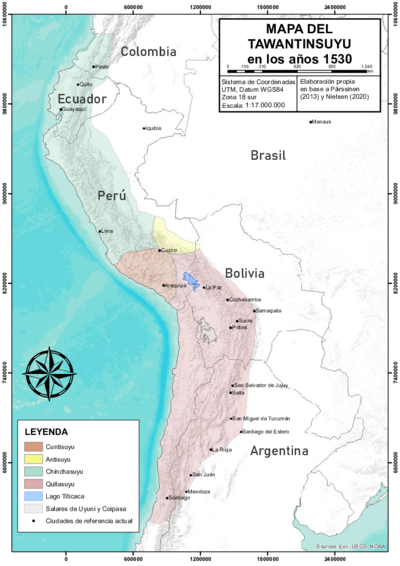
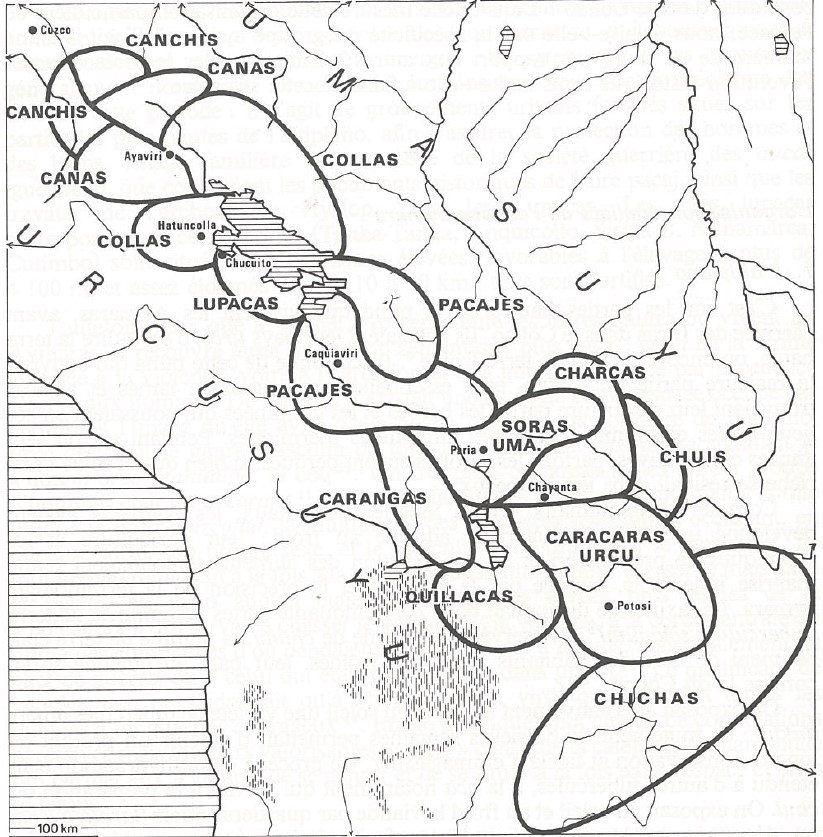
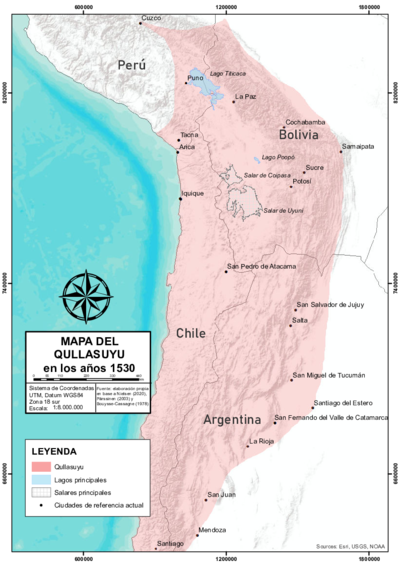
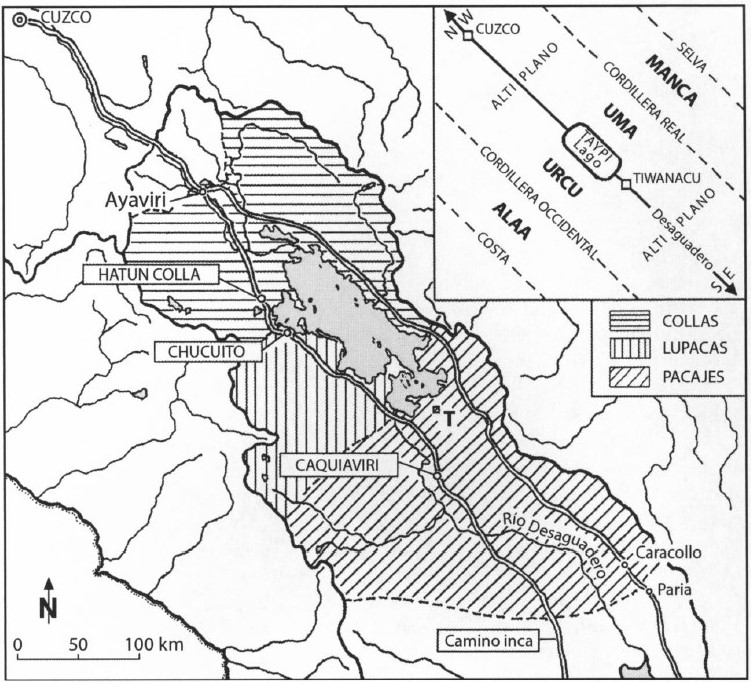
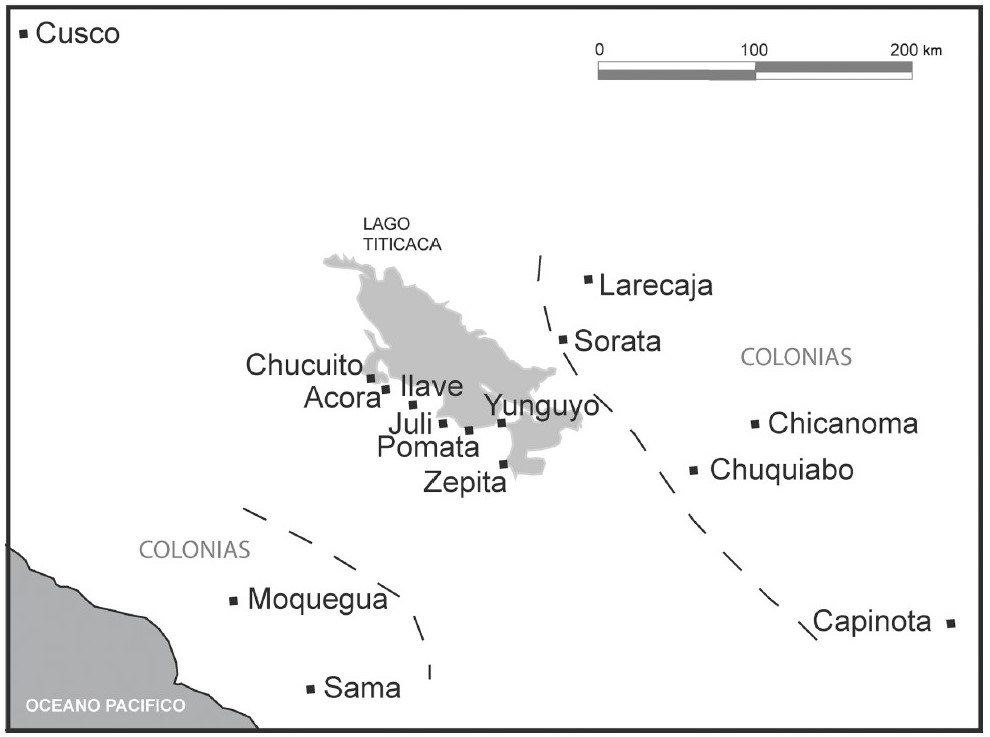
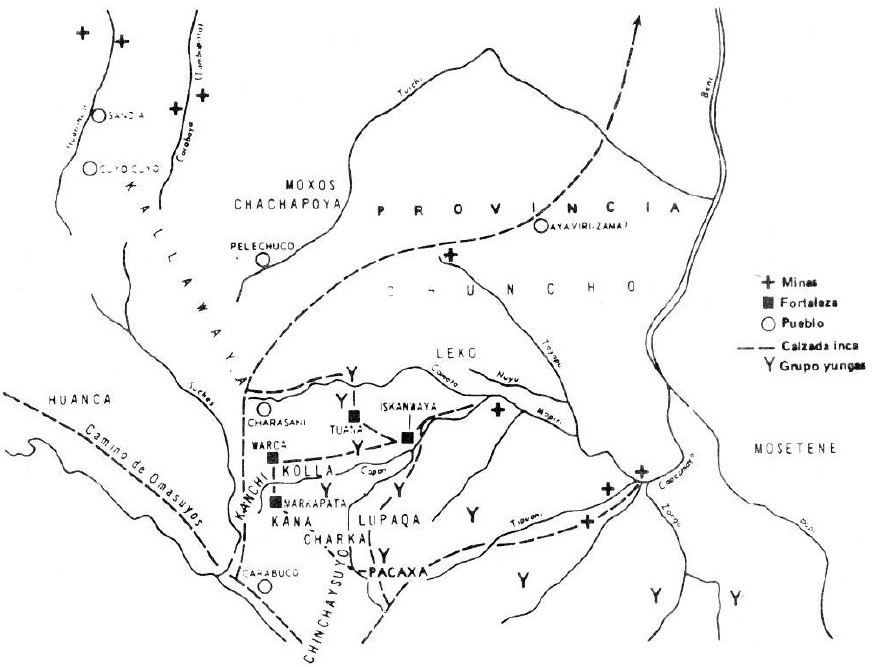
The region shown in the map, was part of the Qullasuyu, which was the southern district of the Inca state, also known as the Tawantinsuyu which included the large high plateau where the Titicaca Lake is located, the inter-Andean valleys to the east, and the valleys and coastal lands to the west. This map shows the various Lupaqa islands located eastward in the valleys of Larecaja (in present-day Bolivia) in the 16th century. These islands which were intermixed with those of other Aymara Polities AYMARA POLITIES of THE QULLASUYU in the 16th CENTURY , such as the Pakaxa ‘INDIAN ROYAL TOWNS’ (REDUCCIONES) IN THE PACAJES PROVINCE (CORREGIMIENTO) UNDER SPANISH COLONIAL RULE IN THE LATE 16TH CENTURY , Charka, Kana and Qulla, are a result of Inca state resettlement policies which were based on the ‘vertical control of ecological tiers’ system. While the core settlements of the Lupaqa were located in the cold lands of the high-plateau THE AYMARA POLITY OF THE LUPAQA: COMMERCIAL DESTINIES AND VERTICALITY IN THE 16TH CENTURY near the Titicaca Lake (the most important being Chucuito, located at the border between present-day Peru and Bolivia), their territory also included a series of “islands” at different altitudes down the western and eastern valleys thus forming a sort of ‘vertical archipelago.’1

In the process of Inca expansion southwards, Aymara polities such as the Lupaqa were initially major rivals to the Incas and were only subdued after long struggles. Once integrated into the Inca state (late 1400s) as respectful allies and warriors, they made substantial contributions to the expansion of the Inca state’s eastern and southern borders THE EASTERN BORDERS OF THE QULLASUYU - SOUTHERN DISTRICT OF THE INCA STATE - 16th CENTURY . For these contributions, Aymara polities were rewarded with grants of maize valley land, exempted from certain tribute obligations, and, more importantly, were allowed to retain a large degree of autonomy under Inca indirect rule. In these ways the Inca state consolidated the hegemony of Aymara polities and the power of their authorities over the territories they shared with the Urus, Pukinas, and other ethnic groups. The Lupaqa islands THE AYMARA POLITY OF THE LUPAQA: COMMERCIAL DESTINIES AND VERTICALITY IN THE 16TH CENTURY both to the west and the east were occupied by permanently resettled Lupaqas (called mitmaqkuna) who were sent there from the seven Lupaqa high plateau centers to produce goods (such as coca and maize) which were in turn sent back to the center within a framework of a tributary relationship.2

Over time, the pressures of colonial rule, including the pressures of tribute, the creation of reducciones (forced resettlements into concentrated indigenous towns designed to facilitate easier control and conversion) and the mita further eroded traditional structures and memories. **Colonial policies, aimed at integrating indigenous populations into the Spanish colonial framework, led to a gradual disarticulation and fragmentation of the large precolonial aymara polities. Nowadays, the indigenous communities residing in the former Lupaqa settlements primarily speak Aymara. However, the collective memory of having been part of a larger Lupaqa macro-ethnic polity has faded.
**

As communities adapted to new socio-political environments, the stories and traditions that once emphasized their belonging to the Lupaqa macro-ethnicity were not consistently passed down. Instead, a broader Aymara identity emerged, reflecting a more generalized cultural and linguistic heritage that is still vibrant today but no longer tied to the specific historical consciousness of the Lupaqa polity. In essence, while the language and some cultural practices have persisted, the specific ethnic identity tied to the Lupaqa macro-ethnicity has been overshadowed by the broader Aymara identity. This reflects the profound and lasting impacts of colonization and the complex processes of cultural change and resistance over the centuries.

REFERENCES:

Murra, John. “Los límites y las limitaciones del ‘archipiélago vertical’ en los Andes.” Lecture, Segundo Congreso Peruano del Hombre y la Cultura Andina, Trujillo. October, 1974.

Saignes, Thierry. Los Andes Orientales Historia de un Olvido. Cochabamba: CERES/IFEA, 1985.

Van Buren, Mary. “Rethinking the Vertical Archipelago.” American Anthropologist 98, no. 2 (June 1996): 338–51.

https://doi.org/10.1525/aa.1996.98.2.02a00100.


  1. John Murra, “Los Límites y las Limitaciones del ‘Archipiélago Vertical’ en los Andes.” (Lecture at the Segundo Congreso Peruano del Hombre y la Cultura Andina, Trujillo, Perú, October, 1974); Mary Van Buren, “Rethinking the Vertical Archipelago.” American Anthropologist 98, no. 2 (June 1996): 338–51 ↩︎

  2. Thierry Saignes. Los Andes Orientales Historia de un Olvido. (Cochabamba: CERES/ IFEA, 1985). ↩︎

Citation

Medeiros, Carmen, Celina Grisi, and Radek Sánchez Patzy. 2024. 'THE AYMARA POLITY OF THE LUPAQA: EASTERN INTER-ANDEAN VALLEY COLONIES UNDER INCA RULE 16TH CENTURY'. Dispossessions in the Americas. https://dia.upenn.edu/en/content/BOL0026Y/
  • Download Image

Reading in Spanish

Map Commentary 1500 - 1599

LA POLITICA AYMARA DEL LUPAQA: COLONIAS DEL VALLE INTERANDINO ORIENTAL BAJO DOMINIO INCAICO, SIGLO XVI

  • Medeiros, Carmen

  • Grisi, Celina

  • Sánchez Patzy, Radek

Published: 2024

  • Download Image
Saignes, T. (1985). Los Andes orientales: Historia de un olvido. CERES - Instituto Francés de Estudios Andinos.

Saignes, T. (1985). Los Andes orientales: Historia de un olvido. CERES - Instituto Francés de Estudios Andinos.

  • Download Image

Reading in Portuguese

Map Commentary 1500 - 1599

A POLÍTICA AIMARÁ DO LUPAQA: COLÔNIAS DO VALE INTERANDINO ORIENTAL SOB O DOMÍNIO INCAICO NO SÉCULO XVI

  • Medeiros, Carmen

  • Grisi, Celina

  • Sánchez Patzy, Radek

Published: 2024

  • Download Image
Saignes, T. (1985). Los Andes orientales: Historia de un olvido. CERES - Instituto Francés de Estudios Andinos.

Saignes, T. (1985). Los Andes orientales: Historia de un olvido. CERES - Instituto Francés de Estudios Andinos.

Resumo

A região que se mostra no mapa fazia parte do Qullasuyu, que era o distrito sul do Estado inca, conhecido também como o Tawantinsuyu que incluía o grande altiplano onde se encontra o lago Titicaca, os vales interandinos ao leste, e os vales e terras litorâneas ao oeste. Este mapa localiza as diversas ilhas lupaqa situadas ao leste nos vales de Larecaja (na atual Bolívia) no século XVI. Estas ilhas, que se encontravam entre outras polis aymaras AS POLÍTICAS AIMARÁS DO QULLASUYU NO SÉCULO XVI , como os pakaxa AS REDUCCIONES DA PROVÍNCIA DE PACAJES (CORREGIMIENTO) SOB O DOMÍNIO COLONIAL ESPANHOL, NO FINAL DO SÉCULO XVI , os charka, os kana e os qulla, são o resultado das políticas de reassentamento do Estado inca, baseadas no sistema de “controle vertical de níveis ecológicos”. Embora o núcleo dos assentamentos dos lupaqa estivesse situado nas terras frias de la altiplanicie OS ESTADOS AIMARÁS AO REDOR DO LAGO TITICACA NOS SÉCULOS XV E XVI , perto do lago Titicaca - o mais importante era Chucuito, situado na fronteira entre o atual Peru e a Bolívia -, seu território também incluía uma série de “ilhas” a diferentes altitudes nos vales ocidentais e orientais, formando assim uma espécie de “arquipélago vertical”.1

No processo de expansão dos incas para o sul, los aymaras, como os lupaqa, foram inicialmente fortes rivais dos incas e só após prolongados combates foram submetidos. Uma vez integrados ao Estado inca - no final do século XIV - como aliados respeitosos e guerreiros, contribuíram substancialmente para a expansão das fronteras orientales y meridionales do Estado inca AS FRONTEIRAS ORIENTAIS DO QULLASUYU - DISTRITO SUL DO ESTADO INCA – SÉCULO XVI . Por essas contribuições, los pueblos aymaras foram recompensados com concessões de terras nos vales de milho, isentos de certas obrigações de tributo e, o que é ainda mais importante, foi-lhes permitido conservar alto grau de autonomia sob o domínio indireto dos incas. Assim, o Estado inca consolidou a hegemonia dos Estados aimarás e o poder de suas autoridades sobre os territórios que compartilhavam com os urus, os pukinas e outros grupos étnicos. Las islas Lupaqa A POLÍTICA AIMARÁ DO LUPAQA: DESTINOS COMERCIAIS E VERTICALIDADE NO SÉCULO XVI , tanto ao oeste quanto ao leste, estavam ocupadas por lupaqas reassentados permanentemente - chamados mitmaqkuna - que eram enviados ali desde os sete centros do altiplano lupaqa para produzir bens (como coca e milho) que, por sua vez, eram enviados de novo ao centro no contexto de sua relação tributária.2

Com o passar do tempo, as pressões do domínio colonial, **incluídas as pressões do sistema de tributo, a criação de reducciones- reassentamentos forçados nos povoados indígenas concentrados, criados para facilitar o controle e a conversão - e a mita erodiram ainda mais as estruturas e memórias tradicionais. As políticas coloniais, destinadas a integrar as populações indígenas ao contexto colonial espanhol, produziram uma gradual desarticulação e fragmentação dos grandes estados aymaras pré-coloniais. Hoje, as comunidades indígenas que habitam nos antigos assentamentos lupaqa falam, principalmente, aimará. Mas a memória coletiva de ter sido parte de um importante sistema político macroétnico lupaqa tem desaparecido.
**

À medida que as comunidades se adaptavam aos novos ambientes sociopolíticos, as histórias e tradições que naquele momento marcavam seu pertencimento à macroetnia lupaqa não continuaram sendo transmitidas de forma consistente. Em troca, uma identidade aimará mais ampla foi se instalando, como reflexo de um patrimônio cultural e linguístico mais generalizado que continua vivo hoje, mas que já não está vinculado à consciência histórica específica da entidade política lupaqa. De tal forma, mesmo que a língua e algumas práticas culturais tenham persistido, a identidade étnica específica ligada à macro-etnia lupaqa foi ofuscada pela mais ampla identidade aimará. Esse é o reflexo dos profundos e perduráveis impactos da colonização, e os complexos processos de mudança e resistência cultural ao longo dos séculos.

REFERÊNCIAS:

Murra, Juan. “Los límites y las limitaciones del ‘archipiélago vertical’ en los Andes”. Conferencia, Segundo Congresso Peruano do Homem e a Cultura Andina, Trujillo. Outubro de 1974.

Saignes, Thierry. Los Andes Orientales Historia de un Olvido. Cochabamba: CERES/IFEA, 1985.

Van Buren, Mary. “Rethinking the Vertical Archipelago.” American Anthropologist 98, no. 2 (June 1996): 338–51.

https://doi.org/10.1525/aa.1996.98.2.02a00100.


  1. John Murra, “Los Límites y las Limitaciones del ‘Archipiélago Vertical’ en los Andes”. (Conferencia en el Segundo Congreso Peruano del Hombre y la Cultura Andina, Trujillo, Perú, octubre, 1974); Mary Van Buren, “Rethinking the Vertical Archipelago”. American Anthropologist 98, nº 2 (junio de 1996): 338-51 ↩︎

  2. Thierry Saignes. Los Andes Orientales Historia de un Olvido. (Cochabamba: CERES/ IFEA, 1985). ↩︎

Citation

Medeiros, Carmen, Celina Grisi, and Radek Sánchez Patzy. 2024. 'A POLÍTICA AIMARÁ DO LUPAQA: COLÔNIAS DO VALE INTERANDINO ORIENTAL SOB O DOMÍNIO INCAICO NO SÉCULO XVI'. Dispossessions in the Americas. https://dia.upenn.edu/pt/content/BOL0026Y/

  • Download Image

Related Content

COLONIAL LEGISLATIONS AS A FRAMEWORK FOR DISPOSSESSIONS IN THE CENTRAL ANDES: THE COLONIAL MITA

COLONIAL LEGISLATIONS AS A FRAMEWORK FOR DISPOSSESSIONS IN THE CENTRAL ANDES: THE COLONIAL MITA

Timeline 1530 - 1790
COLONIAL LEGISLATION AS THE FRAMEWORK FOR DISPOSSESSIONS IN THE CENTRAL ANDES: THE INDIGENOUS TRIBUTE 1570s -1620s

COLONIAL LEGISLATION AS THE FRAMEWORK FOR DISPOSSESSIONS IN THE CENTRAL ANDES: THE INDIGENOUS TRIBUTE 1570s -1620s

Timeline 1570 - 1620
COLONIAL LEGISLATIONS AS FRAMEWORK FOR DISPOSSESSIONS IN THE CENTRAL ANDES: THE “REDUCCIONES” OR “PUEBLOS REALES DE INDIOS”

COLONIAL LEGISLATIONS AS FRAMEWORK FOR DISPOSSESSIONS IN THE CENTRAL ANDES: THE “REDUCCIONES” OR “PUEBLOS REALES DE INDIOS”

Timeline 1570 - 1749
THE EASTERN BORDERS OF THE QULLASUYU - SOUTHERN DISTRICT OF THE INCA STATE - 16th CENTURY

THE EASTERN BORDERS OF THE QULLASUYU - SOUTHERN DISTRICT OF THE INCA STATE - 16th CENTURY

Map Commentary 1500 - 1599
THE TAWANTINSUYU IN THE 1530s – TERRITORY OF THE INCA STATE

THE TAWANTINSUYU IN THE 1530s – TERRITORY OF THE INCA STATE

Map Commentary 1530 - 1539
AYMARA POLITIES of THE QULLASUYU in the 16th CENTURY

AYMARA POLITIES of THE QULLASUYU in the 16th CENTURY

Map Commentary 1530 - 1539
THE QULLASUYU IN THE 1530s – SOUTHERN DISTRICT OF THE INCA STATE

THE QULLASUYU IN THE 1530s – SOUTHERN DISTRICT OF THE INCA STATE

Map Commentary 1530 - 1539
THE AYMARA POLITY OF THE LUPAQA: COMMERCIAL DESTINIES AND VERTICALITY IN THE 16TH CENTURY

THE AYMARA POLITY OF THE LUPAQA: COMMERCIAL DESTINIES AND VERTICALITY IN THE 16TH CENTURY

Map Commentary 1500 - 1599
THE AYMARA POLITY OF THE LUPAQA: COMMERCIAL DESTINIES AND VERTICALITY IN THE 16TH CENTURY

THE AYMARA POLITY OF THE LUPAQA: COMMERCIAL DESTINIES AND VERTICALITY IN THE 16TH CENTURY

Map Commentary 1500 - 1599

Dispossessions in the Americas

A project by

University of Pennsylvania

Copyright 2024

With support from

Mellon Foundation

Site design & development

Element 84

Art Credits

Saignes, T. (1985). Los Andes orientales: Historia de un olvido. CERES - Instituto Francés de Estudios Andinos.

Site Pages

  • Home
  • Explore
  • About
  • Authors
  • Art
  • Bodies
  • Curricula
  • Cultural Heritage
  • Maps
  • Territories