Dispossesions in the Americas

Dispossesions in the Americas

  • Home
  • Explore
  • About
  • Authors
  • Art
  • Bodies
  • Curricula
  • Cultural Heritage
  • Maps
  • Territories
Back to Explore
Map Commentary 1500 - 1599

THE AYMARA POLITY OF THE LUPAQA: COMMERCIAL DESTINIES AND VERTICALITY IN THE 16TH CENTURY

  • Medeiros, Carmen

  • Grisi, Celina

  • Sánchez Patzy, Radek

Published: 2024

  • Download Image
Gallardo, F. (2013) Sobre el comercio y mercado tradicional entre los Lupaca del siglo XVI: un enfoque económico sustantivo. Chugara, revista de antropología chilena. 45 (4), 599 -612.

Gallardo, F. (2013) Sobre el comercio y mercado tradicional entre los Lupaca del siglo XVI: un enfoque económico sustantivo. Chugara, revista de antropología chilena. 45 (4), 599 -612.

Abstract

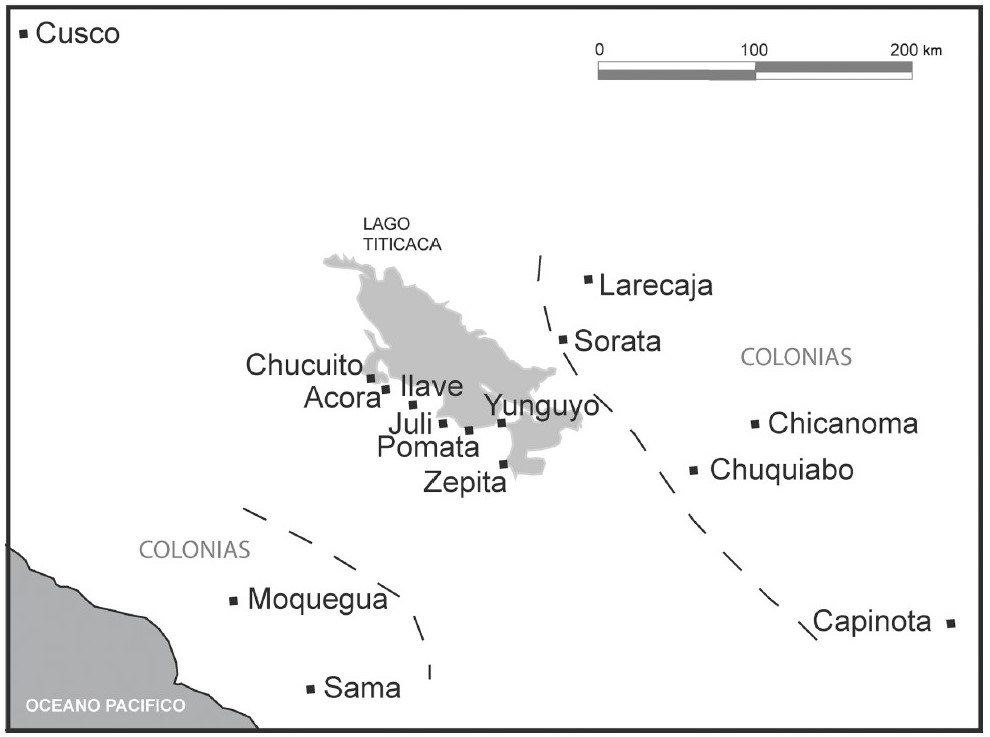
This map shows the various ‘islands’ or colonies that the Aymara polity AYMARA POLITIES of THE QULLASUYU in the 16th CENTURY of the Lupaqa had both to the east and the west of the high plateau in the [*Qullasuyu*](/en/content/BOL0002Y/), the southern district of the Inca state or [*Tawantinsuyu*](/en/content/BOL0001Y/), in the 16th century. The map is based on the information found in the 1567 Spanish colonial census, which included testimonies from the Lupaqa authorities.[^1] Following the Andean model of ‘vertical control of ecological tiers’ AYMARA POLITIES of THE QULLASUYU in the 16th CENTURY the core settlements of the Lupaqa were located in the cold lands of the high-plateau, but their territory included a series of “islands” at different altitudes down the western and eastern valleys thus forming a sort of ‘vertical archipelago.’[^2] As shown in the map, the core settlements were near the Titicaca Lake (the most important being Chucuito, located at the border between present-day Peru and Bolivia), two islands or colonies down the western slopes (now in Peru) and 5 down the eastern slopes (now in Bolivia).

The Lupaqa polity is believed to have had a population of 20,000 households according to the last Inca khipu record or 100,000 inhabitants at the time of the Spanish Conquest – a significant population for those days and much larger than the other polities that existed contemporaneously to them.1 Much of what is known today about the Lupaqas comes from two main sources: the 1567 administrative visit carried out by Garci Diez de San Miguel and the new census carried out during Toledo’s Visita General in the 1570s.2 In 1951 Marie Helmer published a summary of the administrative visit carried out in 1567 which included the province of Chucuito, the administrative center of the Lupaqa. When the full text of the visit was published some years later a greater interest arose thanks to the detailed information it contained therefore engaging ethnologists, archeologists, ethnographers, and historians alike. 3 This text which included information on the previous censuses of 1553 and 1559 as well as the 1567 one, gained wider historical perspective when it was compared to the information of Virrey Francisco de Toledo’s rule (1569 – 1581) during which a new census was carried out during his Visita General in the 1570s.4

When the Incas reached the Titicaca Lake, the Lupaqa did not confront them in battle - unlike local groups occupying the north and eastern shores of the Lake who offered great resistance to the Inca invasion - rather, they became integrated into the Inca jurisdiction.5 This meant that, “the Lupaca kings and their governors were local Aymara-speaking individuals who were not replaced by Inca governors, as was often the case in areas that fell under Tawantinsuyu rule”6 (own translation).

What is more, the strong Inca influence on Lupaqa life suggests that the Lupaqa polity (or at least its elite) was able to flourish through this symbiotic relationship with the Inca. It is possible that the Incas reinforced the elite’s power in exchange of these people’s contribution to the state in terms of clothing and manpower – especially when the state intervened in some conquest.7 From the Lupaqa point of view, this relationship allowed them to maintain their autonomy – at least relative to that of their neighbors. This is relevant when considering that the Lupaqas were able to maintain some of this autonomy well into the colonial regime. Indeed, the Lupaqa were not forced into an encomienda but rather they became a “repartimiento real”. This means that the Crown oversaw the repartimiento directly, and therefore the tribute they had to pay as vassals of the king went directly to the Spanish crown.

The map which shows distances that took up to two months to be traveled, is a testament of the Lupaqas prestige as herders and long-distance carriers. This proved expertise ultimately also gave them leverage and a privileged position when negotiating terms with both the Inca state and the subsequent Spanish colonial administration, therefore maintaining a level of autonomy, unlike other polities who might have been less influential.

It is also important to note that given their significant agricultural surplus, the Lupaqa valley ‘islands’ played a crucial role in supplying goods to Spanish colonizers, providing Spanish cities with wine, wheat, maize, and coca during the second half of the 16th century.8 This economic utility afforded the Lupaqas a different form of dispossession, where they were integrated into the colonial economy rather than being outrightly displaced or subjected to the same degree of exploitation as other groups. What is more, this agricultural output helped sustain Spanish cities and settlements, facilitating the growth and consolidation of colonial power in the region.

Altogether, this illustrates how the colonization experience, and therefore the varying forms of dispossession experienced, was unique to each Aymara polity AYMARA POLITIES of THE QULLASUYU in the 16th CENTURY . Each group’s pre-colonial social structure, economic activities, geographical location, and relationship with the Inca state influenced how they were affected by and responded to Spanish colonization.

REFERENCES:

Choquecahua, Alex. “Caciques del Reino Lupaca en la Provincia de Chucuito de la

Intendencia de Puno - 1786 – 1824”. Revista Peruana de Antropología 5, no. 6 (2020): 159-164.

https://doi.org/10.4067/s0717-73562013000400009.

Cook, Noble David (Ed.). Tasa de Visita General de Francisco de Toledo. Lima: Universidad Nacional Mayor de San Marcos, 1975.

Diez de San Miguel, Garci. Visita Hecha a la Provincia de Chucuito por Garci Diez de San Miguel en el Año 1567. Lima: Casa de la Cultura Peruana, 1964.

Gallardo Ibáñez, Francisco. “Sobre El Comercio y Mercado Tradicional Entre Los Lupaca Del Siglo XVI: Un Enfoque Económico Sustantivo.” Chungará 45, no. 4 (2013): 599–612.

Hyslop, John. “El Área Lupaca bajo el Dominio Incaico: un Reconocimiento Arqueológico”. Histórica 3, No.1, (1979): 53-79.

Julien, Catherine. Toledo y los Lupacas: Las Tasas de 1574 y 1579. Herausgeber, 1998.

Murra, John. “An Aymara Kingdom in 1567”. Ethnohistory 15, no. 2 (1968): 115-151.

Murra, John. “Los Límites y las Limitaciones del ‘Archipiélago Vertical’ en los Andes.” Lecture, Segundo Congreso Peruano del Hombre y la Cultura Andina, Trujillo, Perú, October, 1974.

Van Buren, Mary. “Rethinking the Vertical Archipelago.” American Anthropologist 98, no. 2 (June 1996): 338–51.

https://doi.org/10.1525/aa.1996.98.2.02a00100.


  1. John. Hyslop, “El Área Lupaca bajo el Dominio Incaico: un Reconocimiento Arqueológico” Histórica 3, no.1 (1979): 53-79; Van Buren, “Rethinking the Vertical Archipelago.”, 338–51.; John Murra, “An Aymara Kingdom in 1567”. Ethnohistory 15, no. 2 (1968): 115-151; Alex Choquecahua, “Caciques del Reino Lupaca en la Provincia de Chucuito de la Intendencia de Puno - 1786 – 1824”. Revista Peruana de Antropología 5, no. 6 (2020). ↩︎

  2. Noble David. Cook, (Ed.). Tasa de Visita General de Francisco de Toledo (Lima: Universidad Nacional Mayor de San Marcos, 1975); Garci Diez de San Miguel, Visita Hecha a la Provincia de Chucuito por Garci Diez de San Miguel en el año 1567. (Lima: Casa de la Cultura Peruana, 1964). ↩︎

  3. Diez de San Miguel, Visita hecha a la Provincia de Chucuito por Garci Diez de San Miguel en el año 1567. ↩︎

  4. Catherine Julien, Toledo y los Lupacas: Las Tasas de 1574 y 1579. (Herausgeber, 1998). ↩︎

  5. Choquecahua, “Caciques del Reino Lupaca en la Provincia de Chucuito de la Intendencia de Puno - 1786 – 1824,” 159-164; Hyslop, “El área Lupaca bajo el Dominio Incaico: un Reconocimiento Arqueológico,”,53-79. ↩︎

  6. Hyslop, “El Área Lupaca bajo el Dominio Incaico: un Reconocimiento Arqueológico,” 55. ↩︎

  7. Hyslop, “El Área Lupaca bajo el Dominio Incaico: un Reconocimiento Arqueológico,” 55. ↩︎

  8. Gallardo Ibáñez, “Sobre El Comercio y Mercado Tradicional Entre Los Lupaca Del Siglo XVI: Un Enfoque Económico Sustantivo,” 341. ↩︎

Citation

Medeiros, Carmen, Celina Grisi, and Radek Sánchez Patzy. 2024. 'THE AYMARA POLITY OF THE LUPAQA: COMMERCIAL DESTINIES AND VERTICALITY IN THE 16TH CENTURY'. Dispossessions in the Americas. https://dia.upenn.edu/en/content/BOL0025Y/
  • Download Image

Reading in Spanish

Map Commentary 1500 - 1599

LA POLÍTICA AYMARA DEL LUPAQA: DESTINOS COMERCIALES Y VERTICALIDAD EN EL SIGLO XVI

  • Medeiros, Carmen

  • Grisi, Celina

  • Sánchez Patzy, Radek

Published: 2024

  • Download Image
Gallardo, F. (2013) Sobre el comercio y mercado tradicional entre los Lupaca del siglo XVI: un enfoque económico sustantivo. Chugara, revista de antropología chilena. 45 (4), 599 -612.

Gallardo, F. (2013) Sobre el comercio y mercado tradicional entre los Lupaca del siglo XVI: un enfoque económico sustantivo. Chugara, revista de antropología chilena. 45 (4), 599 -612.

  • Download Image

Reading in Portuguese

Map Commentary 1500 - 1599

A POLÍTICA AIMARÁ DO LUPAQA: DESTINOS COMERCIAIS E VERTICALIDADE NO SÉCULO XVI

  • Medeiros, Carmen

  • Grisi, Celina

  • Sánchez Patzy, Radek

Published: 2024

  • Download Image
Gallardo, F. (2013) Sobre el comercio y mercado tradicional entre los Lupaca del siglo XVI: un enfoque económico sustantivo. Chugara, revista de antropología chilena. 45 (4), 599 -612.

Gallardo, F. (2013) Sobre el comercio y mercado tradicional entre los Lupaca del siglo XVI: un enfoque económico sustantivo. Chugara, revista de antropología chilena. 45 (4), 599 -612.

Resumo

Este mapa mostra as diversas “ilhas” ou colônias que a polis aymara AS POLÍTICAS AIMARÁS DO QULLASUYU NO SÉCULO XVI dos lupaqa tinha tanto ao leste quanto ao oeste do altiplano no Qullasuyu, o distrito sul do Estado inca ou Tawantinsuyu, no século XVI. O mapa tem base na informação encontrada no censo colonial espanhol de 1567, que incluía testemunhos das autoridades lupaqa.1 Seguindo o modelo andino de “control vertical de los niveles ecológicos” AS POLÍTICAS AIMARÁS DO QULLASUYU NO SÉCULO XVI , o núcleo dos assentamentos lupaqa estava situado nas terras frias do altiplano, mas seu território incluía uma série de “ilhas” a diferentes altitudes nos vales ocidental e oriental, o que constituía assim uma espécie de “arquipélago vertical”.2 Como é possível ver no mapa, os principais assentamentos se encontravam próximos do lago Titicaca - o mais importante era Chucuito, situado na fronteira entre os atuais Peru e Bolívia -, duas ilhas ou colônias nas ladeiras ocidentais (no atual Peru ) e cinco nas ladeiras orientais (na atual Bolívia).

Estima-se que a entidade política lupaqa tivesse uma população de 20.000 famílias, segundo o último registro do khipu inca ou 100.000 habitantes, na época da conquista espanhola, uma população significativa para a época e muito maior que as outras pólis que existiram contemporaneamente a eles.3 A maioria do que hoje se sabe sobre os lupaqa procede de duas fontes principais: a visita administrativa de 1567 realizada por Garci Díez de San Miguel e o novo censo realizado durante a Visita Geral de Toledo, na década de 1570.4 Em 1951, Marie Helmer publicou um resumo da visita administrativa realizada em 1567, que incluía a província de Chucuito, centro administrativo dos lupaqa. Quando uns anos mais tarde foi publicado o texto completo da visita, surgiu maior interesse graças à informação detalhada que continha, que havia capturado a atenção por igual de etnólogos, arqueólogos, etnógrafos e historiadores.5 Este texto, que incluía informação sobre os censos anteriores de 1553 e 1559, bem como do censo de 1567, adquiriu uma perspectiva histórica mais ampla quando foi comparado com a informação do governo do Vice-rei Francisco de Toledo (1569 - 1581) durante o qual foi realizado um novo censo por ocasião de sua Visita Geral, na década de 1570.6

Quando os incas chegaram ao lago Titicaca, os lupaqa não apresentaram batalha - à diferença dos grupos locais que ocupavam as margens norte e leste do lago e que apresentaram forte resistência à invasão inca -, os lupaqa se integraram à organização inca.7 Isso significava que “os reis lupacas e seus governadores eram indivíduos locais que falavam aimará, e que não foram substituídos por governadores incas, como era habitual que acontecesse nas zonas que caíam sob o domínio del Tawantinsuyu”8 (tradução própria).

Com efeito, a forte influência inca na vida lupaqa sugere que o sistema da pólis lupaqa (ou, pelo menos, sua elite) pôde prosperar graças a esta relação simbiótica com os incas. É possível que os incas reforçassem o poder da elite, em troca da contribuição desse povo ao Estado, em termos de indumentária e mão de obra, especialmente quando o Estado realizava uma conquista.9 Do ponto de vista dos lupaqa, esta relação lhes permitiu manter sua autonomia - pelo menos em comparação com a de seus vizinhos. Isso é relevante se levamos em conta que os lupaqas puderam manter parte desta autonomia até períodos avançados do regime colonial. De fato, os lupaqas não foram obrigados a fazer parte de uma encomienda; pelo contrário, eles se tornaram um “repartimiento real”. Isso significa que a Coroa supervisava diretamente o repartimiento e, portanto, tributo que deviam pagar como vassalos do rei era enviado, diretamente, à coroa espanhola.

O mapa, que mostra distâncias que exigiam até dois meses para serem percorridas, é o testemunho do prestígio dos lupaqas como pastores e transportadores de longa distância. Esta perícia e conhecimento técnico lhes proporcionou uma posição privilegiada para negociar tanto com o Estado inca quanto com a posterior administração colonial espanhola, mantendo assim certo nível de autonomia, à diferença de outros povos com menor influência.

É importante apontar também que, devido ao considerável excedente agrícola, as “ilhas” do vale lupaqa tiveram um papel crucial no suprimento de bens aos colonizadores espanhóis, como fornecedores de vinho, trigo, milho e coca para as cidades espanholas, durante a segunda metade do século XVI.10 Esta utilidade econômica determinou que os lupaqas fossem objeto de uma forma diferente de despojo: eles se integraram à economia colonial em lugar de serem diretamente deslocados ou submetidos com o mesmo nível de exploração que outros grupos. E até mesmo, esta produção agrícola ajudou a sustentar as cidades e assentamentos espanhóis, ao facilitar o crescimento e a consolidação do poder colonial na região.

Em síntese, o indicado acima ilustra como a experiência da colonização, e portanto, as diversas formas de despojo experimentadas, foram únicas para cada polis aymara AS POLÍTICAS AIMARÁS DO QULLASUYU NO SÉCULO XVI . A estrutura social pré-colonial de cada grupo, suas atividades econômicas, sua localização geográfica e sua relação com o Estado inca determinaram a forma como se veriam afetados pela colonização espanhola e a resposta que a ela dariam.**

REFERÊNCIAS:

Choquecahua, Alex. “Caciques del Reino Lupaca en la Provincia de Chucuito de la

Intendencia de Puno - 1786 - 1824". Revista Peruana de Antropología 5, no. 6 (2020): 159-164.

https://doi.org/10.4067/s0717-73562013000400009.

Cook, Noble David (Ed.). Tasa de Visita General de Francisco de Toledo. Lima: Universidad Nacional Mayor de San Marcos, 1975.

Diez de San Miguel, Garci. Visita Hecha a la Provincia de Chucuito por Garci Diez de San Miguel en el Año 1567. Lima: Casa de la Cultura Peruana, 1964.

Gallardo Ibáñez, Francisco. “Sobre El Comercio y Mercado Tradicional Entre Los Lupaca Del Siglo XVI: Un Enfoque Económico Sustantivo”. Chungará 45, no. 4 (2013): 599-612.

Hyslop, John. “El Área Lupaca bajo el Dominio Incaico: un Reconocimiento Arqueológico”. Histórica 3, No.1, (1979): 53-79.

Julien, Catherine Toledo y los Lupacas: Las Tasas de 1574 y 1579. Herausgeber, 1998.

Murra, Juan. “An Aymara Kingdom in 1567”. Ethnohistory 15, no. 2 (1968): 115-151.

Murra, John. “Los Límites y las Limitaciones del ‘Archipiélago Vertical’ en los Andes”. Conferência, Segundo Congresso Peruano do Homem e a Cultura Andina, Trujillo, Peru, outubro, 1974.

Van Buren, Mary. “Rethinking the Vertical Archipelago.” American Anthropologist 98, no. 2 (June 1996): 338–51.

https://doi.org/10.1525/aa.1996.98.2.02a00100.


  1. Francisco Gallardo Ibáñez, “Sobre El Comercio y Mercado Tradicional Entre Los Lupaca Del Siglo XVI: Un Enfoque Económico Sustantivo”. Chungará 45, no. 4 (2013): 599-612. ↩︎

  2. John Murra, “Los Límites y las Limitaciones del ‘Archipiélago Vertical’ en los Andes”. (Conferência no Segundo Congresso Peruano do Homem e a Cultura Andina, Trujillo, Peru, outubro, 1974); Mary Van Buren, “Rethinking the Vertical Archipelago”. American Anthropologist 98, nº 2 (junho de 1996): 338-51 ↩︎

  3. John. Hyslop, “El Área Lupaca bajo el Dominio Incaico: un Reconocimiento Arqueológico” Histórica 3, no.1 (1979): 53-79; Van Buren, “Rethinking the Vertical Archipelago”, 338-51.; John Murra, “An Aymara Kingdom in 1567”. Etnohistoria 15, nº 2 (1968): 115-151; Alex Choquecahua, “Caciques del Reino Lupaca en la Provincia de Chucuito de la Intendencia de Puno - 1786 - 1824”. Revista Peruana de Antropología 5, no. 6 (2020). ↩︎

  4. Noble David Cook, (Ed.). Tasa de Visita General de Francisco de Toledo (Lima: Universidad Nacional Mayor de San Marcos, 1975); Garci Diez de San Miguel, Visita Hecha a la Provincia de Chucuito por Garci Diez de San Miguel en el año 1567. (Lima: Casa de la Cultura Peruana, 1964). ↩︎

  5. Diez de San Miguel, Visita hecha a la Provincia de Chucuito por Garci Diez de San Miguel en el año 1567. ↩︎

  6. Catherine Julien, Toledo y los Lupacas: Las Tasas de 1574 y 1579. (Herausgeber, 1998). ↩︎

  7. Choquecahua, “Caciques del Reino Lupaca en la Provincia de Chucuito de la Intendencia de Puno - 1786 - 1824,” 159-164; Hyslop, “El área Lupaca bajo el Dominio Incaico: un Reconocimiento Arqueológico,” 53-79. ↩︎

  8. Hyslop, “El Área Lupaca bajo el Dominio Incaico: un Reconocimiento Arqueológico”, 55. ↩︎

  9. Hyslop, “El Área Lupaca bajo el Dominio Incaico: un Reconocimiento Arqueológico”, 55. ↩︎

  10. Gallardo Ibáñez, “Sobre El Comercio y Mercado Tradicional Entre Los Lupaca Del Siglo XVI: Un Enfoque Económico Sustantivo”, 341. ↩︎

Citation

Medeiros, Carmen, Celina Grisi, and Radek Sánchez Patzy. 2024. 'A POLÍTICA AIMARÁ DO LUPAQA: DESTINOS COMERCIAIS E VERTICALIDADE NO SÉCULO XVI'. Dispossessions in the Americas. https://dia.upenn.edu/pt/content/BOL0025Y/

  • Download Image

Related Content

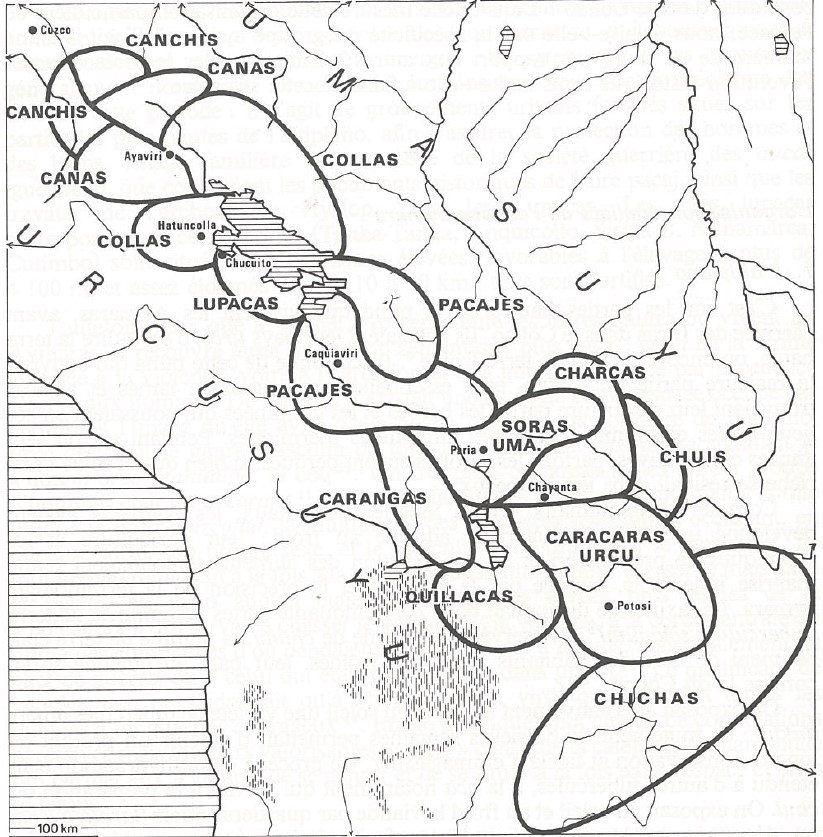
AYMARA POLITIES of THE QULLASUYU in the 16th CENTURY

AYMARA POLITIES of THE QULLASUYU in the 16th CENTURY

Map Commentary 1530 - 1539
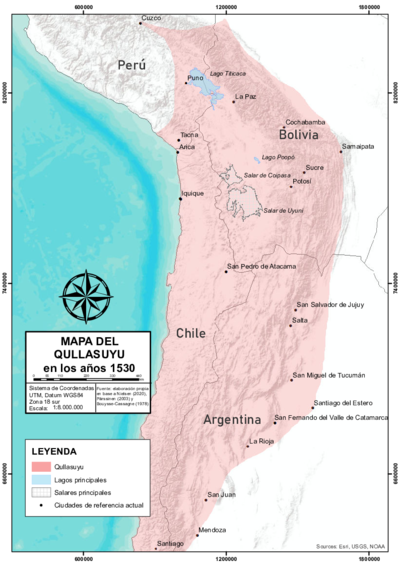
THE QULLASUYU IN THE 1530s – SOUTHERN DISTRICT OF THE INCA STATE

THE QULLASUYU IN THE 1530s – SOUTHERN DISTRICT OF THE INCA STATE

Map Commentary 1530 - 1539
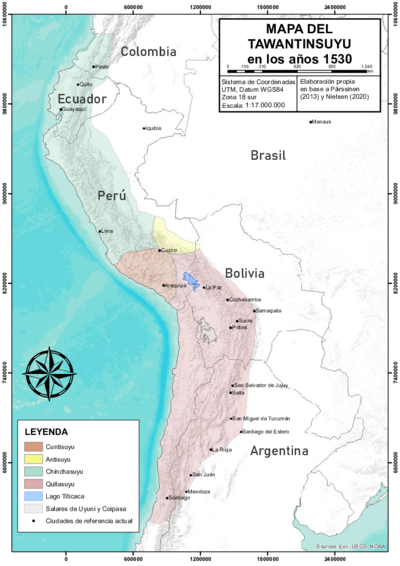
THE TAWANTINSUYU IN THE 1530s – TERRITORY OF THE INCA STATE

THE TAWANTINSUYU IN THE 1530s – TERRITORY OF THE INCA STATE

Map Commentary 1530 - 1539

Dispossessions in the Americas

A project by

University of Pennsylvania

Copyright 2024

With support from

Mellon Foundation

Site design & development

Element 84

Art Credits

Gallardo, F. (2013) Sobre el comercio y mercado tradicional entre los Lupaca del siglo XVI: un enfoque económico sustantivo. Chugara, revista de antropología chilena. 45 (4), 599 -612.

Site Pages

  • Home
  • Explore
  • About
  • Authors
  • Art
  • Bodies
  • Curricula
  • Cultural Heritage
  • Maps
  • Territories